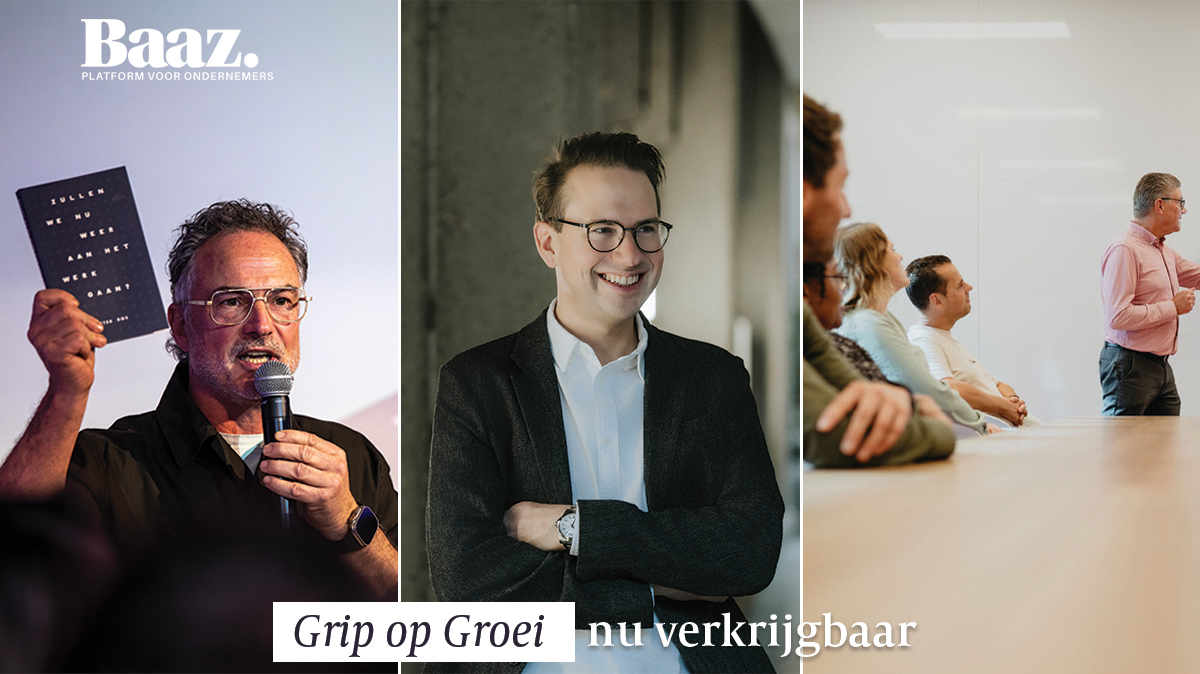

Because growth is not a linear movement. It is a sum of choices about people, processes, technology, and leadership. Those choices determine whether growth becomes a catalyst or a source of friction. In this longread, those themes come together in one overarching story.
Between Holding On and Letting Go
Before you can organize control, you need to understand where that control will be under pressure. Growth brings not only opportunities but also friction, often in places that previously seemed unproblematic.
In the early stages of a business, everything is clear. You are close to customers, make intuitive decisions, and keep the lines short. But as you grow, that playing field changes. What once worked begins to constrict.
Administration that 'was being pulled along' falls behind. Informal communication leads to misunderstandings. Costs rise without it being clear why. Growth amplifies what was already there and thereby exposes the weak spots.
It is precisely there that the core tension arises: you want to maintain control, but at the same time, you must let go. Control does not mean doing everything yourself, but knowing where to steer and where to trust.
People as the Engine of Controlled Growth
When growth becomes tangible, it is within your team. More people means more capacity, but only if that growth is well organized. Otherwise, fragmentation occurs instead of acceleration.
From Employees to Co-Entrepreneurs
A first shift lies in how you view employees. Not as executors, but as co-driving forces behind the organization.
Alfred Griffioen (Winstdelen.com) shows how employee participation fundamentally changes organizations. By allowing employees to share in the value growth, their perspective shifts. Problems are shared, opportunities are jointly utilized, and involvement gains a financial and strategic dimension.
The result is not only less turnover but, above all, an organization that operates collectively smarter. Growth thus becomes less dependent on individuals and more supported by the whole.
Agility in an Uncertain World
But an engaged team alone is not enough. The environment in which organizations grow is less predictable than ever.
Ton Sluiter (HeadFirst Group) outlines a year in which assumptions quickly become outdated and steadfastness must go hand in hand with flexibility. Agility thus becomes a strategic skill.
Strategic workforce planning plays a key role in this. Not reacting to changes but anticipating them. Consciously choosing a mix of fixed and flexible deployment, and developing talent in a way that is future-proof.
The Changing Role of Recruitment
This shift directly impacts how organizations attract talent.
According to Jan Devos (LinkedIn Talent Solutions), AI is radically changing recruitment. Not by taking over the work, but by shifting it. Less time spent on searching and selecting, more time for interpretation and relationship building.
Recruiters who actively embrace AI become more strategic. They not only build teams but also directly influence the quality and direction of the organization. This also changes the moment when recruitment begins, as seen at Digital Inside.
Instead of reacting to vacancies, the focus shifts to structural visibility. Recruitment marketing shows that trust does not arise at the moment of applying but in the phase before that.
Organizations that organize this well build a continuous influx of suitable talent. Not as coincidence, but as a predictable system. And it is precisely there that control arises.
Structure Beneath the Surface: Communication, Processes, and Culture
Growth is often visible in numbers and size, but control lies precisely in the underlayer of the organization. In how people collaborate, communicate, and organize their work.
Communication as a Growth Accelerator
As organizations grow, communication increases exponentially. More content, more channels, and more coordination.
Maaike Voeten (Textmetrics) shows that it is precisely there that the difference is made. Not by communicating more, but by communicating better. Clearly, consistently, and scalably.
Strong communication accelerates decision-making, increases trust, and makes it possible to operate as one organization with more people.
Processes as Silent Growth Accelerators
In addition to communication, processes play an equally important role, often invisible but essential.
Without structure, dependence on individuals arises. With structure, predictability emerges. Not to document everything, but to create repeatability.
Processes make performance measurable, onboarding scalable, and collaboration less vulnerable. They thus form the silent engine behind growth.
Clarity as a Leadership Issue
That structure ultimately comes together in leadership.
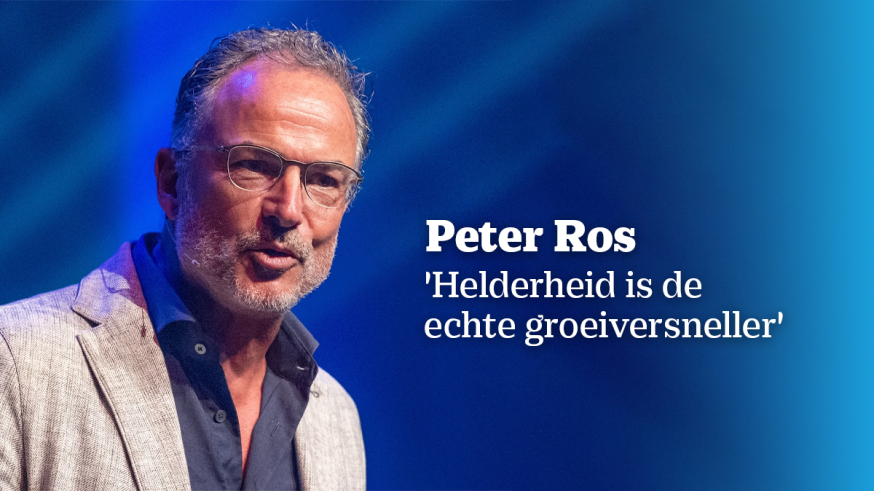
Peter Ros describes how a lack of clarity leads to noise. Organizations become busy with activities that seem logical but lack direction. Meetings replace decision-making, and visibility is confused with productivity.
Control only arises when it is clear what the work really is. What is a priority and what is not. That requires choices, and thus leadership that dares to cut back instead of just adding.
Collaborating in a Changing Reality
As organizations grow, the way people collaborate also changes. Teams become more dynamic, work more abstract, and dependencies grow larger.
Why Team Building is Not Enough
In that context, team building takes on a different role.
Where it was once seen as a solution, in practice it proves to be mainly a mirror. It shows what is happening but changes nothing without follow-up.
The real value lies in what happens after such a moment: having conversations, making expectations explicit, and adjusting behavior. Without that step, collaboration remains superficial.
Change as a Social Process
This aligns with the perspective of Antonie van Nistelrooij and Marcel Kuhlmann.
In their book, Psychology of Change, they show that change is not a technical issue but a social process. It arises in interaction. In conversations, feedback, and reflection.
This also means that control does not lie in planning but in organizing that interaction. In making space for counterplay instead of avoiding it.
Listening as a Foundation
According to Juri Hoedemakers, this is where it often goes wrong. Many organizations focus on numbers but lack insight into what is really happening. Teams become disconnected, expectations are not articulated, and trust erodes.
His conclusion is clear: control begins with listening. Not as a one-time action but as a structural part of leadership.
Numbers as a Compass: Financial Management and Strategic Space
In addition to people and culture, there is another factor that is decisive for control: financial insight. Without that insight, growth remains a feeling and not a substantiated strategy.
Financial Management as a Foundation
In the Endbaaz of this edition, financial management is therefore central.
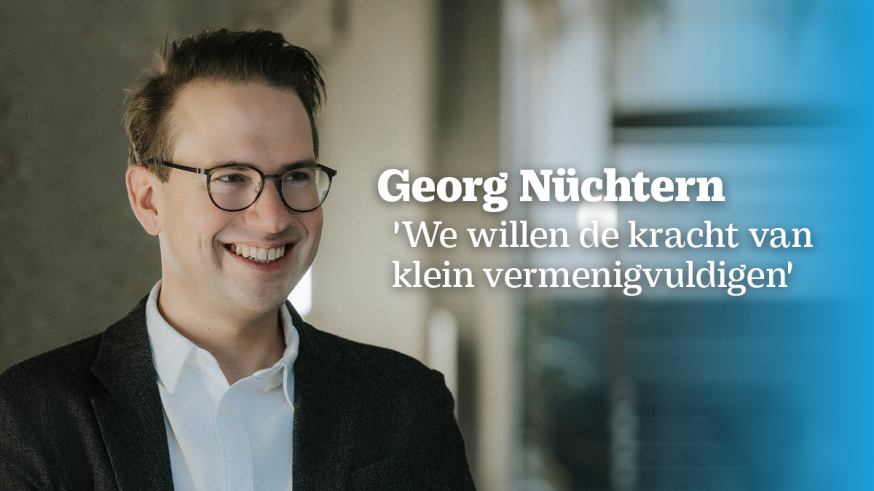
In conversation with Georg Nüchtern, Managing Director at Qonto Netherlands, it becomes clear how inefficiency in financial processes can slow down growth. Entrepreneurs spend time on administration, while that time is precisely needed for strategic choices.
By automating processes and creating real-time insight, space is created. Space to decide faster, plan better, and invest more purposefully.
Organizing for Scalability
But the story goes further than just tools. Qonto shows how internal structure must also grow. With the tribe model, teams are organized around clear goals and responsibilities, allowing speed to be maintained despite scale.
The underlying principle is widely applicable. Structure and autonomy can go hand in hand, provided they are well designed.
Technology as a Foundation, If Used Correctly
Technology plays a role in almost every aspect of growth. The way you use it determines whether it becomes an accelerator or adds extra complexity.
A Vision for Tools
Without clear choices, technology leads to fragmentation. Systems do not connect, data becomes scattered, and processes become unclear.
Control arises when technology supports the strategy. When tools work together and information is centrally available.
AI as a Skill, Not a Hype
This is especially clear in the story of Corefocus.ai.
Many organizations already have AI in-house but use it hardly at all. Not because of the technology, but due to a lack of skills. AI only works if people know how to use it. Prompting is giving a briefing, and giving a briefing is a skill.
Organizations that invest in this see immediate gains in time, quality, and scalability, without extra capacity.
Technology in Practice
Even at the product level, you see this development reflected.
The Google Pixel 10a shows how AI, security, and long software support come together in a work tool that directly contributes to productivity. Not as a gadget, but as an extension of your work process. For this reason, the device has received an SME Best Choice Award.
Control over Growth is Not an Endpoint
If there is one red thread running through this edition, it is this: control is not an endpoint but a continuous process.
Each phase of growth requires new choices. What works today may fall short tomorrow. Structure must adapt, leadership must adjust, and systems must continue to align with reality.
Control therefore does not mean that everything is fixed. It means that you can move without losing control.
This requires a balance between numbers and culture, between structure and flexibility, between technology and human direction, and between direction and trust.
Growth thus becomes no random outcome of success, but a conscious strategy. Not an anxious acceleration, but a controlled movement forward.
Further Reading in Baaz Magazine
You see: we discuss a lot in this new edition of Baaz Magazine. We zoom in deeper on each of these themes in the articles and provide concrete insights, practical examples, and strategic tools.
In the WinmagPro section of the magazine, you will also find an in-depth look at the technological side of growth, with extensive attention to cybersecurity and cloud solutions. These are essential building blocks for organizations that want to scale up without losing sight of risks.
All this and much more can be read in the latest edition of Baaz Magazine. Get it online now or take a subscription and never miss an edition again!