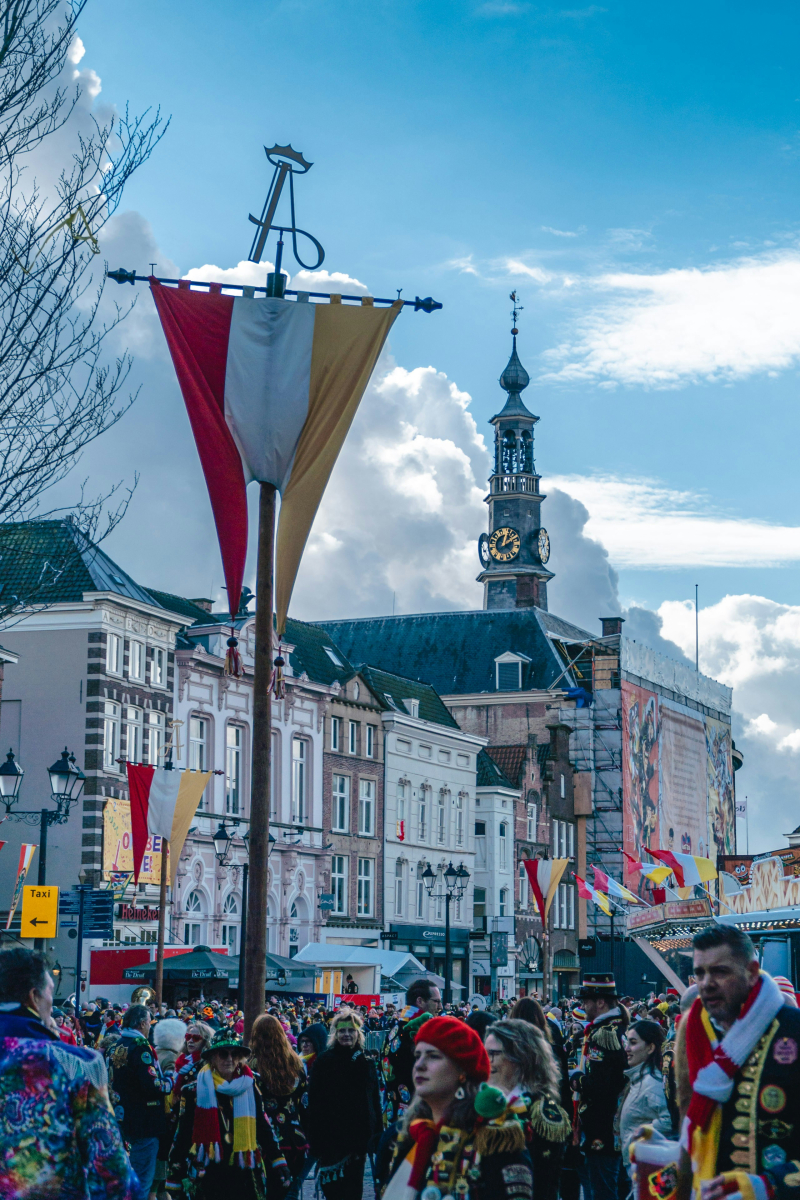

Carnival for entrepreneurs: revenue, revenue, revenue
When you say carnival, you say revenue. According to figures from various industry organizations in retail and hospitality, the extra spending during carnival amounts to hundreds of millions of euros nationwide, with a clear concentration in North Brabant and Limburg. Think of:
- Hospitality revenue (cafés, restaurants, temporary party locations)
- Sales of costumes and party supplies
- Hotel stays
- Catering, security, and event organization
- Local transport and logistics services
In cities like Breda, Den Bosch, Eindhoven, and Maastricht, hotels are fully booked weeks in advance. Hospitality entrepreneurs sometimes achieve revenue in these few days that is comparable to several regular weeks.
For entrepreneurs, carnival means not only atmosphere but also scale. It is a short, intensive peak moment that requires preparation, staff planning, and smart purchasing.
Seasonal strategy: months of preparation for four days of celebration
For many businesses, carnival starts as early as November – or even earlier. Retailers order costumes and accessories well in advance. Hospitality entrepreneurs create plans for crowd control, security, and inventory management.
This requires:
- Tight cash flow planning (high pre-financing of inventory)
- Temporary scaling up of staff
- Extra agreements with suppliers
- Permits and coordination with the municipality
Here lies a clear lesson for entrepreneurs: those who approach carnival as a strategic project instead of a spontaneous busy week increase their margins. Think of dynamic pricing, packages (food + entry), collaboration with local associations, and smart marketing via social media.
Not just hospitality: B2B also benefits
At first glance, carnival seems particularly interesting for cafés and party shops. However, other sectors also benefit:
- Printing companies for promotional materials or clothing printing
- Technical service providers for extra lighting, sound, and stages
- Security companies
- IT service providers in ticketing, cash register systems, and network capacity
- Cleaning companies
Even business service providers benefit indirectly. Accountants and consultants assist with temporary contracts, risk assessment, and insurance issues.
Carnival thus shows how a cultural event activates a complete local value chain.
Productivity loss or team building?
At the same time, carnival raises another entrepreneurial question: what does it mean for productivity?
In parts of Southern Netherlands, public life comes to a near standstill. Employees take mass leave or call in sick. Some companies even close completely on Monday and Tuesday. This can lead to:
- Reduced availability
- Delayed projects
- Lower productivity
However, more and more organizations are choosing a different approach. Instead of resistance, they integrate carnival into their corporate culture. Think of a joint lunch or drinks, more flexible working hours, or even working from home entirely during Carnival week. And of course, you can also celebrate Carnival with the workforce itself.
This enhances engagement and regional ties. Especially for companies that operate locally, ignoring carnival can create distance from employees and customers.

Reputation and local anchoring
For entrepreneurs in the South, carnival is more than just revenue. It is part of identity. Sponsoring a carnival association or a parade float provides visibility and goodwill. Local presence during carnival strengthens:
- Brand recognition
- Relationships with customers
- Networking within the community
- Employer branding
Especially in a tight labor market, local involvement can be decisive. Employees prefer to work for an organization that understands and supports the regional culture.
Risks and points of attention
Where many people gather, risks also arise. Entrepreneurs must take into account:
- Safety measures and liability
- Insurance coverage for events
- Alcohol policy and supervision
- Cybersecurity for temporary cash register systems or mobile payment points
In particular, temporary infrastructure – such as extra wifi networks or mobile card machines – requires attention. Busy peak moments are sensitive to disruptions or even fraud. A good risk plan is therefore not a luxury, but a necessity. But every event planner will tell you that.
What do entrepreneurs learn from carnival?
Carnival is essentially a case study in peak management. Everything must be right in just a few days: logistics, personnel, marketing, safety, and customer experience.
The key lessons:
- Preparation determines margin.
- Collaboration increases reach.
- Flexibility in personnel and planning is crucial.
- Local culture is strategic capital.
Those who apply these principles outside the carnival season – for example during product launches, sales campaigns, or other peak periods – build a more resilient organization.
Carnival as a mirror of entrepreneurship
Now, just after the Carnival weekend, the economic impact is visible in full cafés and sold-out costumes. Although the peak has passed, the streets in the South will not be empty today and tomorrow. But the real value lies deeper.
Carnival shows how culture, commerce, and community come together. For entrepreneurs, it is an annual experiment in scaling, risk management, and local connection.
And perhaps that is the most important lesson: behind every folk festival lies a business model. It is up to you whether you can capitalize on it.