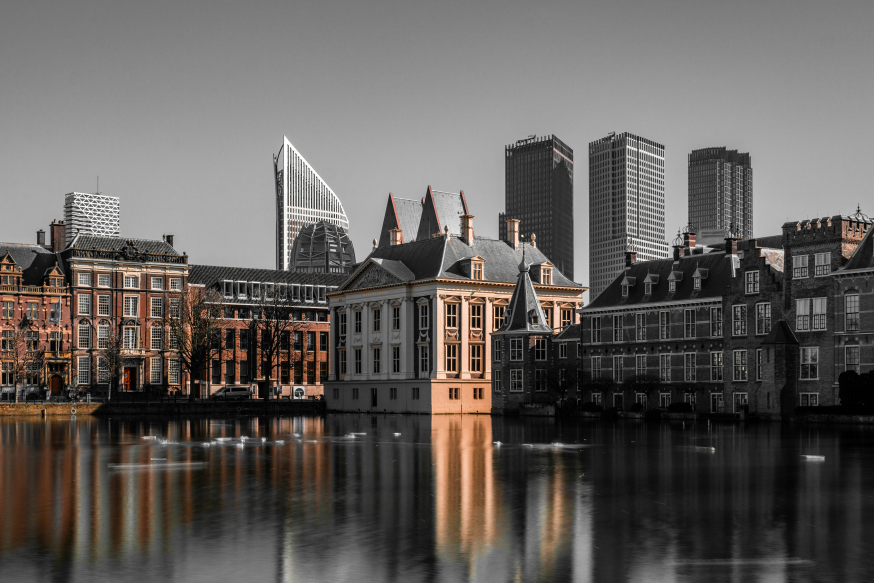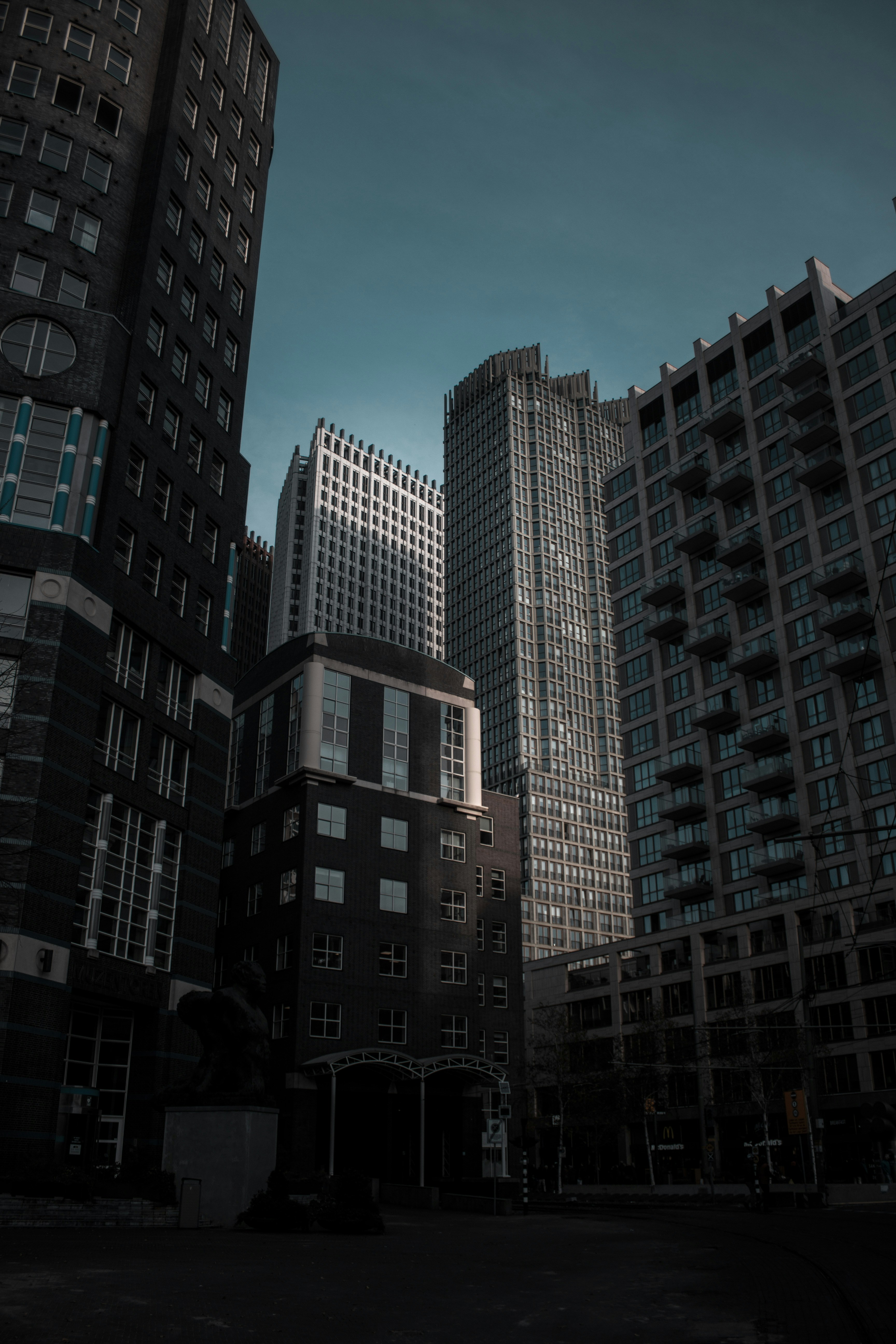

The Netherlands is densely populated and the pressure on space is high – yet we relatively often choose to densify "within the existing measure" instead of extreme height. This is not only a matter of taste, but also of regulations, technology, and safety. Think of airport zones where building height is limited (such as around Schiphol), wind and shadow effects in compact city centers, and additional fire safety requirements in tall buildings.
Skyscrapers are globally the emblem of economic strength, architectural daring, and space efficiency. From Manhattan to Dubai, they dominate the urban landscape and symbolize progress. However, high-rise construction in the Netherlands remains notably limited. Why does the rise of the skyscraper lag behind here, and what could the Dutch business community gain from a higher outlook on the future? And what does this say about high-rise construction in the Netherlands as a solution for space shortages and economic growth?
What do skyscrapers add to the Dutch urban landscape?
The skyline is the business card of a city. High-rise buildings can contribute to the recognizability, attractiveness, and positioning of a city on an international level. Rotterdam, with its Zalmhaven tower and De Rotterdam, shows how an urban silhouette can be both bold and economically attractive.
For entrepreneurs, iconic buildings offer value on multiple levels: they attract (international) companies, provide space for multifunctional hubs, and increase the prestige of the environment. The physical height translates into symbolic visibility – and that pays off in attention, investments, and visitor flows.
Why do we see relatively few high-rise buildings in the Netherlands?
Despite the advantages, skyscrapers are more of an exception than a rule in the Netherlands. This has multiple causes. First of all, spatial planning plays a central role. The Netherlands has a strong tradition of horizontal dispersion and careful landscape management. High-rise buildings are often seen as an intrusion on historical cityscapes or as a risk for wind load and shadow effects. Therefore, high-rise construction in the Netherlands often remains a subject of intense considerations between livability, costs, and spatial quality.
Additionally, high-rise buildings in the Netherlands often trigger extra research and design requirements. Municipalities work with high-rise visions and regularly request wind studies (for example, according to NEN 8100) for high building volumes to limit wind nuisance and wind danger. Fire safety also plays a heavier role: in tall buildings, accessibility, evacuation, and the firefighting response are more complex, which affects design, costs, and permitting processes. Moreover, in specific regions, legal height restrictions apply due to aviation regulations (such as the Airport Layout Decision around Schiphol).
Furthermore, the Netherlands has a geological disadvantage: the soft subsoil in many urban areas makes high-rise construction technically complex and costly. Add public resistance and cautious policies to this, and it becomes clear why the skyline in many cities remains relatively low.
The business case is also not always straightforward: higher construction costs, longer lead times, and sometimes limitations in infrastructure (accessibility, construction logistics, network capacity) can make the difference between "iconic" and "financially unfeasible".
Nevertheless, the support is slowly changing. The pressure on space and housing stock calls for vertical solutions, and municipalities are increasingly willing to engage in these discussions.
Opportunities for entrepreneurs: skyscrapers as business hubs
For companies, skyscrapers offer more than just a view. They create a concentration of economic activity, stimulate cross-pollination between sectors, and provide state-of-the-art facilities. In metropolitan regions where space is scarce, such as the Randstad, vertical expansion is a logical response to the growing demand for work and meeting spaces.
Moreover, many of these buildings are designed as mixed-use zones: you will find offices, meeting rooms, hospitality, co-working spaces, and even short-stay accommodations. This combination makes them particularly suitable as a location for modern entrepreneurs: flexible, accessible, and representative.
The image also plays a role. A company that establishes itself on the 30th floor of an iconic tower radiates ambition and self-confidence. In a competitive market, this can make a difference with clients and talent.
At the same time, it is good to realize: "height" is also an operational choice. Think of service costs, security, lift capacity, logistics (deliveries), and emergency procedures. For some companies, this is a plus (professional, well-organized), while for others it is a hurdle.
Meeting at the highest level - literally
There are some examples of high-quality business locations in Dutch skyscrapers:
The Zalmhaven (Rotterdam)
At 215 meters, this is the tallest building in the Netherlands. The upper floors offer not only luxury apartments but also business spaces with panoramic views of the city by the river. Close to the financial heart of Rotterdam and excellently accessible.
A'DAM Tower (Amsterdam-Noord)
Creative, quirky, and perfect for meetings with a twist. This tower houses, among other things, the A'DAM&Co member club, various meeting rooms, and a revolving restaurant with views over the IJ and the city center. Although it is not the tallest, it is one of the most famous and oldest in the Netherlands.
The Edge (Zuidas Amsterdam)
Not the tallest, but an icon in sustainability and technology. Here, smart workplaces, top facilities, and international allure come together.
New Babylon (The Hague)
Located next to The Hague Central Station. This multifunctional complex is ideal for entrepreneurs who want to combine political, administrative, and business activities in The Hague.
These locations are not only impressive in height but also functionally strong: well accessible, professionally facilitated, and equipped with all modern technology for meetings, hybrid events, and networking gatherings.
The future of skyscrapers in the Netherlands
Despite good residential-work figures, the Netherlands is also modernizing further. Cities like Rotterdam, The Hague, and Amsterdam are experimenting with new high-rise zones. Sustainable techniques make building at greater heights more efficient, energy-saving, and socially acceptable. The mix of living and working is also becoming more attractive, especially as urban mobility changes and hybrid working demands flexible office formats. Thus, high-rise buildings in the Netherlands are increasingly coming into view as a realistic (and sometimes necessary) way to combine growth, living, and working. The sky is, in any case, the limit.