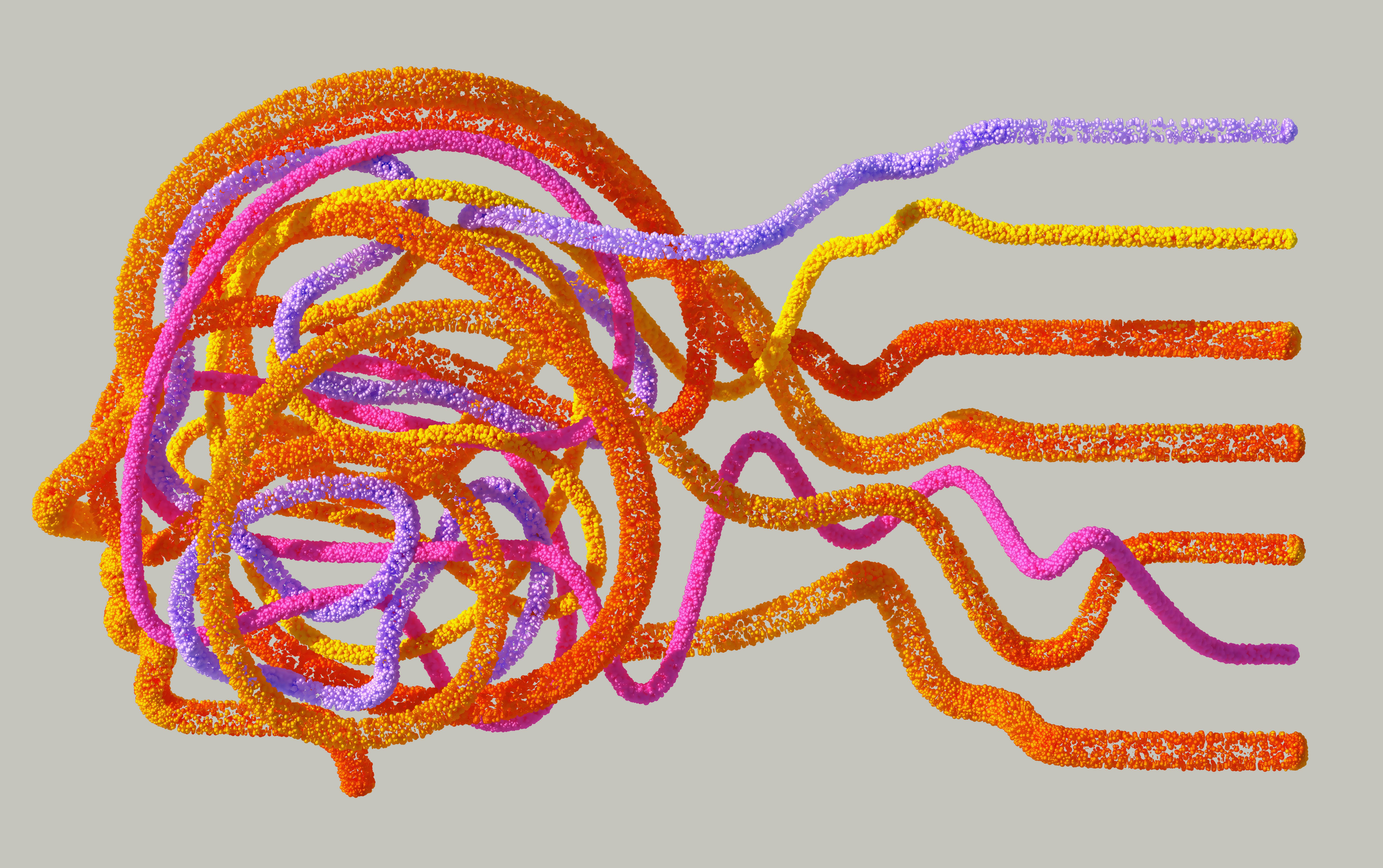

This article shows why strong brains get stuck faster, how the scale tips from strength to vulnerability, and what helps to downshift without denying yourself. Not as a step-by-step plan, but as a clear framework with practical consequences.
Recognition without a label
- Thinking faster than your environment can keep up
- Often being "on", having difficulty shutting down
- Perfectionism as a control mechanism
- Sleep quality decreases during busyness, craving for stimulation in quiet phases
(HB/ADHD deepens this pattern; the approach below helps in both cases.)
1. The brain of fast thinkers (and of HB/ADHD explained)
The brain of fast thinkers (without a label)
Fast thinkers process information at lightning speed, easily make connections, and seek challenge and meaning. Routine feels sticky; with too few stimuli, you start scanning for novelty (new stimuli, or 'craving for stimulation'), while too many stimuli can overwhelm. The pattern is recognizable: a lot of thinking power, sometimes a slow brake. This leads to peaks (flow/hyperfocus) and troughs (procrastination, fragmentation). This is often caused by a high 'baseline alertness': biologically, you are set sharper to your environment than average, making 'shutting down' an active, conscious task. This explains why the aforementioned Default Mode Network consumes so much energy for you; you simply use more 'stationary' fuel because your associative engine keeps running at full speed even in idle mode. Without good regulation, this can lead to mental overload. You can experience these challenges in regulating or shutting down even without a diagnosis; HB/ADHD deepen the pattern but are not a prerequisite.
The brain of the person with ADHD: rhythm on waves
With ADHD, dopamine and norepinephrine fluctuate more strongly throughout the day. This means sometimes laser focus and energy peaks, and sometimes "failure": starting is difficult, routine feels heavy, and stimuli pull your attention away. The nervous system seeks novelty to achieve a focus-lock. Handy for innovation; risky when that craving for stimulation becomes structural. This is not a lack of attention, but a regulation problem of attention: you are 'under-stimulated' for boring tasks and 'over-stimulated' by interesting (side) matters. Stress amplifies the waves: cortisol makes you more alert but also increases restlessness and reactivity.
The brain of the gifted: fast, deep, meaning-driven
Giftedness is characterized by fast information processing, deep associations, and a strong drive for complexity and meaning. You make connections faster, see patterns that others miss, and think several steps ahead. The downside: low tolerance for superficial tasks, higher sensitivity to overstimulation, and internal pressure ("this can be better / this must be right"). Neurologically, gifted individuals often have a higher degree of neural efficiency and a finely tuned system, but this also means that the system is more sensitive to 'noise' or irrelevant stimuli.
Together: the brain of the gifted person with ADHD
When these two profiles come together, you get fast information processing with slower regulation: a 'Ferrari brain' with weak traction control. In practice: thinking at lightning speed, creatively connecting, quickly hyper-focusing – but struggling to start on command, dose, stop, and recover. Your cognitive engine can reach Formula 1 speeds; your regulation system (the executive functions in the prefrontal cortex) is not always equipped for that. The system seeks stimuli to engage and meaning to stay motivated. The risk: mental overdrive.

Thinking faster, regulating slower (summarized)
Giftedness is characterized by fast information processing, deep associations, and a strong craving for complexity and meaning. ADHD adds a nervous system that works with fluctuations in dopamine and norepinephrine. The combination with giftedness results in peaks in energy, focus, and creativity – but just as well troughs where nothing seems to work. Your cognitive engine can reach Formula 1 speeds; your regulation system (brake, traction control) is not always equipped for that. That is the 'Ferrari brain' of a gifted person with ADHD: impressive ability (HB) that becomes vulnerable in corners and on 'wet pavement' due to an unpredictable road surface (ADHD fluctuations). The road surface (your environment, moments of rest, and energy level) determines whether you can safely utilize that speed.
The double dynamic: craving for stimuli, yearning for rest
A brain that seeks complexity finds routine boring and seeks new stimuli on its own. This is handy for innovation and entrepreneurship; it is disastrous when that search for stimulation becomes a permanent state. Hyperfocus alternates with crash moments. The mailbox, five chat channels, and three projects side by side feel stimulating – until you realize that you can no longer shut down and your sleep quality evaporates. This often leads to a 'stimulation paradox': you seek action to avoid boredom, but that same action exhausts your nervous system. Here, mental overdrive arises: your brain runs faster than your recovery can keep up – and that is precisely what leads to mental overload.
Stress and sleep: where it usually goes wrong
Chronic stress and sleep deprivation undermine precisely those functions that the 'Ferrari brain' needs to stay on the road: planning, working memory, prioritization, impulse control. You notice it as subtle noise: harder to start, more easily distracted, less clear decisions. As soon as sleep quality declines, amygdala activity increases, making you more emotionally reactive and your logical brain harder to maintain control. Pushing through seems logical – but is often the moment when the system overloads itself. It is not that you "want too much"; it is that the regulation lag increases while the speed rises. That breaks your focus – especially when recovery moments are absent.
2. Strength and vulnerability: perfectionism as disguised stress

Why perfectionism helps at first and then hinders
Perfectionism feels for many fast thinkers – with or without HB/ADHD – like the counterforce to chaos: if I do everything 110%, it remains clear and under control. In the beginning, that works. But perfectionism is a greedy manager: every detail can be better, every paragraph sharper, every product more complete. Your mental bandwidth drains away into micromanagement, repetitive work, and ruminating. In fact, it is often a form of 'anxiety management': by doing everything perfectly, you hope to ward off the unpredictability of your own brain. The bar rises faster than the available time and energy. What was "good enough" yesterday feels like the minimum today. Thus, overcompensation creeps in: your perfectionism tries to quell internal unrest – while simultaneously feeding that unrest. This increases the allostatic load: the cumulative wear and tear on your body and brain due to chronic overstimulation.
The price of always being "on"
Those who continuously drive at top speed experience more noise, less nuance, and less energy for relationships. Sleeping becomes more difficult, irritation is closer to the surface, and small setbacks feel large. Not because you are weaker, but because your system no longer receives recovery moments. Productivity without recovery is exploitation – even if you still achieve a lot. For entrepreneurs, this often means a decrease in decision-making quality: you make faster but less thoughtful decisions because your brain is simply 'full.'
From an employer's perspective, you can find concrete frameworks to break that 'always-on' culture in Preventing burnout in 2025: tips for employers
What does "rest, structure, and rhythm" mean without it becoming boring?
Rest and structure are not an antidote to ambition, but prerequisites for sustainable performance. For the 'Ferrari brain', a strict, boring regime rarely works; rather, a rhythm that offers both predictability and challenge works. Think of clear anchors (fixed start times, fixed closing times), limited context switching (one dominant theme per block), and conscious dosing of stimuli (using novelty on your terms, not those of your notifications).
Practical balance principles
With these principles, you can prevent mental overload without tempering your ambition:
- Rhythm as a strategy: fixed sleep times, a beginning ritual that calms your nervous system (light, movement, breath), and an ending ritual that "shuts down" your brain. Consider your 'shutdown ritual' as a strategic defragmentation of your hard drive; it is the first step to learn to effectively relax after an intensive workday.
- Hyperfocus by design: schedule deep work as the first big block and make closing explicit: note the next micro-step. This prevents the 'startup friction' that often causes procrastination in ADHD.
- Sensory rest: minimize noise. A fixed workspace, noise-cancelling headsets, gray tones on distractors, and notifications in windows instead of permanently open or popping up. Research on the 'Cognitive Load Theory' confirms that visual and auditory noise significantly reduces mental capacity in fast thinkers, leading to faster cognitive exhaustion and a higher error rate. Therefore, it is essential to know how to improve your concentration and how to regain your focus in the digital chaos.
- Energy intake instead of willpower: regular meals with proteins and sufficient salts help stabilize dopamine dynamics; such an seemingly small detail often has a disproportionate effect.
- Recognizing red flags: jaw tension, accelerated thinking, heart rate, and a short fuse are not character flaws but signals of nervous system overload. See them as dashboard lights that ask for adjustment.
The goal is not to tame yourself, but to remove just enough friction from your system so that your thinking power can shine. This way, you maintain control and downshift without denying yourself.
3. Medication: a resource, not a miracle cure
What stimulants do – and what you notice from them
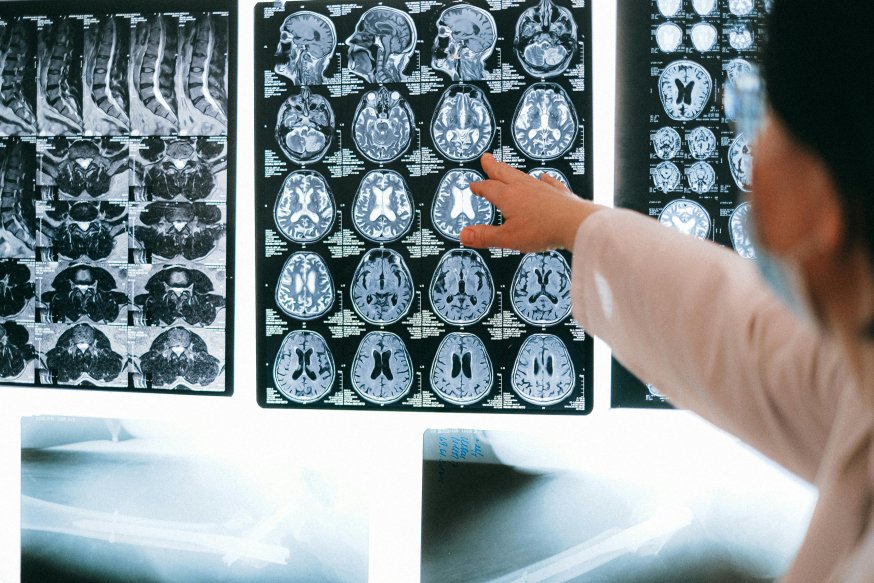
Substances such as methylphenidate and similar stimulants affect the signal transmission in brain areas for attention and executive functions. The noticeable effect is often not "more energy", but rather calm: thoughts fall into place, a clear line of priorities emerges, and external noise becomes less dominant. It lowers the threshold for executive functions, making tasks that previously felt 'heavy' more accessible. For many entrepreneurs, this means: better able to choose, start, and finish.
When does medication help – and when does it work against you?
Medication works best when it lands on a foundation of rhythm, sufficient sleep, and a realistic workload. Then it is an amplifier of what you are already doing well. However, if you are structurally tired or under high stress, the same dose can have a different effect: you feel "tighter", but the underlying overload is ignored. In practice, this leads to overdrive, restlessness, and ultimately a harder crash. Using medication to mask structural overload is like overclocking a computer that is already overheating: the result is inevitable system failure. Using medication as a start button to still meet an unachievable schedule is the quickest way to energy debt.
In short – helps when:
- Foundation is in order (sleep, nutrition, movement, realistic workload) → amplifier of what already works.
- You apply it to tasks that matter (deep work, decisions, finishing), not as a general "on button".
- In consultation with your doctor, paying attention to timing and side effects.
In short – does not help when:
- You have sleep deprivation or high stress → cortisol is already elevated. Extra stimulation can lead to overstimulation, restlessness, and poorer sleep. The risk is that you completely ignore the physical signals of exhaustion due to the increased focus.
- Perfectionism as a driving force → Using medication to maintain unrealistic expectations and planning reinforces the pattern you are trying to break.
The chaos may feel smaller for a moment, but your energy debt grows and overstimulation can lead to even more stress.
The role of lifestyle remains bigger than you think
Nutrition and movement, but also light and rhythm are not lifestyle links in the margin; they are the beams supporting every regulatory system. Think of morning light to anchor your circadian rhythm, short intensive movement moments to release built-up tension, and regularity in meals to stabilize your energy management. Medication can work well on top of that – but does not replace it.
About dosage and timing: always discuss this with your doctor, especially since life and work rhythms help determine what is "good". Coordination with your doctor remains paramount.
4. Entrepreneurship with respect for your neurology
What does control look like without cramping?
Control is not the same as micromanaging. It is the ability to arrange your environment so that your brain can optimally use its strengths and vulnerabilities are not constantly triggered. This is the core of neuro-inclusive entrepreneurship: you adapt the environment to your brain, rather than the other way around. For the 'Ferrari brain', this means: clear lane markings, planned pit stops, and the right circuit.
- Lane markings: choose a maximum of three real priorities per day and commit to one dominant context per block. Agendas are not wish lists; they are safety plans. Agendas are essentially a budget of your limited mental energy, so you do not have to remember what you were going to do, which provides more rest.
- Pit stops: microbreaks without screens (water, air, light). No "wandering" in an app, but briefly resetting your nervous system.
- Choosing circuits: not every project requires Gold standard. Agree in advance what "Bronze" (publishable), "Silver" (neater), and "Gold" (exceptional) means, and reserve Gold only for work with strategic value. This is not a concession to quality – it is quality: goal-conform. Learn the difference between 'strategic quality' and 'compulsive perfectionism'. Digital tools that simplify and accelerate work processes help visibly with this.
Relationships and the entrepreneurial system
Mental overload affects not only your own energy but also your team and your relationships. Transparent language helps: mention that you switch quickly and sometimes "overheat", and explain what you do when that happens (walk, take off headset, close channel). This way, you make your regulation part of professional collaboration instead of a private problem. Strong brains work best in systems that understand them. It also helps to make social pressure discussable and normalize agreements; this article on dealing with social pressure in the workplace provides practical language and examples for that.
Case study: the mentorship program Patrons of Commerce (sponsored by Riverty) uses mentorship, connection, and knowledge sharing to strengthen the mental resilience of young entrepreneurs
Business impact
- Less context switching → more deep work hours per week
- Better predictability of output → tighter promises to customers
- Lower error pressure → less rework and fires
- Clear "Definition of Done" → shorter lead time on standard tasks
5. Finally: learning to shift to prevent mental overload
A brain that is so powerful demands respect – not struggle. Highly gifted individuals with ADHD often perform exceptionally well, especially when they learn to collaborate with their own neurology. The key is not to run harder, but to learn to shift: knowing when to go full throttle, when to ease off, and when to enter the pit lane. It is not a plea for less ambition, but for better alignment and preventing mental overload.
You do not need to tame your brain; you need to learn to collaborate with how it works. Those who do so discover that the 'Ferrari brain' is not only fast but also reliable – exactly the kind of engine you can build on as an entrepreneur. This way, you maintain sustainable focus and prevent mental overload without denying yourself.
Whether you recognize yourself as a fast thinker, HB, or ADHD – or both: the principles are the same – choose today one micro-step (e.g., fixed closing time or one priority) and build from there.
After that, you can further refine your system with this overview of tips to prevent burnout as an entrepreneur – practical, concise, and directly applicable.