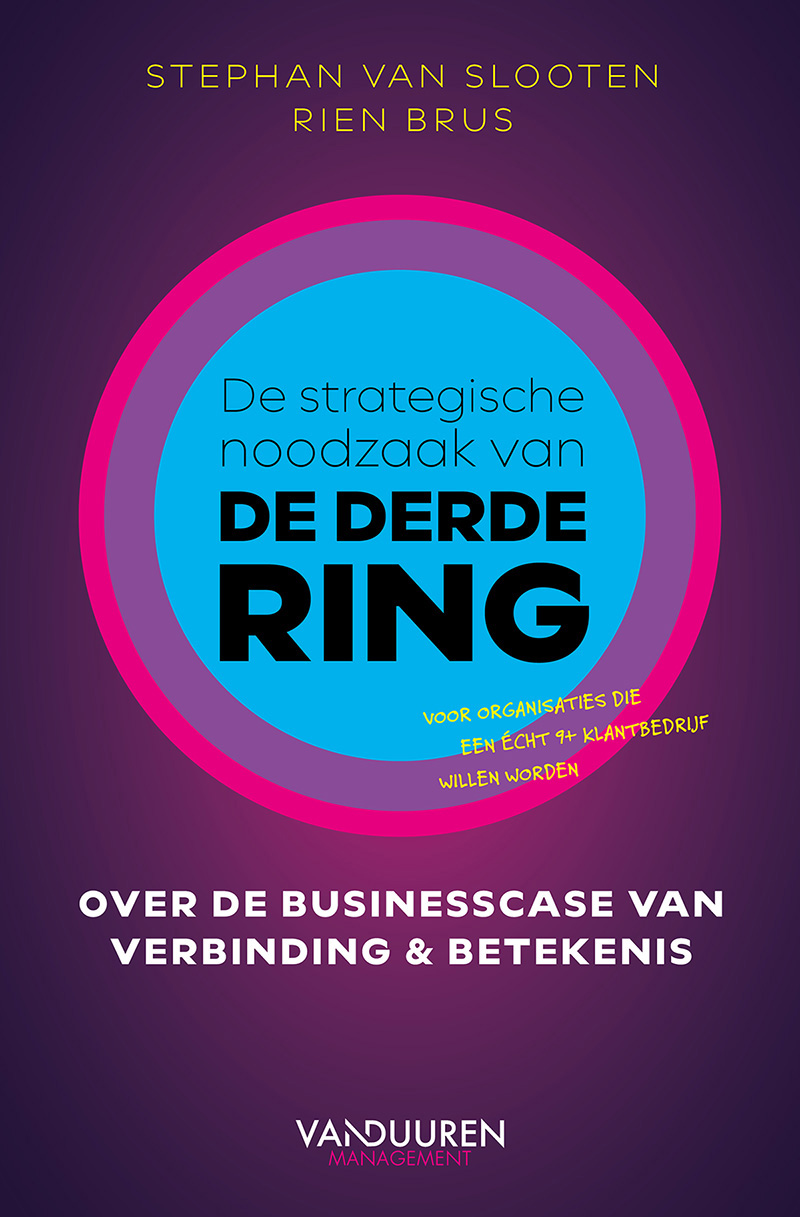

Many organizations still invest heavily in optimizing their products and processes. This yields efficiency, but rarely loyalty. 'You don't get applause for something that just works,' is the central observation. Improvements in the functional core of the offering and operational execution – the first two 'rings' – are necessary, but insufficient.
Also read: New book Workweek for winners offers an alternative to failed New Year's routines
Competing on what cannot be copied
The real difference arises in the Third Ring: the domain of connection, trust, and relevance in the lives of customers. Here, it’s not about what you deliver, but about what you mean. Organizations that succeed in this create not just satisfied customers, but ambassadors. And this proves to be the only sustainable advantage in times of hyper-competition.
In The Third Ring, the classic CXPA model is redefined as a strategic tool for meaningful customer relationships. The book shows how organizations:
- formulate a credible customer strategy
- learn to listen differently than just to functional feedback
- design customer journeys around moments of true connection
- measure what is happening beneath the surface
- and focus on culture as the foundation for lasting 9+ experiences.
Also read: Does authenticity make the difference in marketing?
From 'good enough' to lasting memorable
The Third Ring is not a CX project, but a strategic choice for the entire organization. Those who understand this game do not grow by becoming better at what everyone can copy, but by excelling in what is uniquely human: connection and meaning.
Also read: Newsletter marketing has become indispensable in 2026