
Why Optimizing Your Environment Determines How Fast You Grow (and How to Adjust It Smartly)
Success is often attributed to discipline, perseverance, and talent. But in practice, something else plays a much larger role: your environment. Not because motivation is unimportant, but because behavior rarely stands alone. It is continuously influenced by what happens around you, both visible and invisible.
The place where you work, the people you interact with, and even the small choices you make daily form a system that determines how you function. That system can accelerate you, but it can just as easily slow you down. Those who learn to optimize their environment gain control over growth. Those who ignore it waste energy unnecessarily.
Growth is Not a Willpower Problem, but a Context Problem
Many entrepreneurs try to perform better by improving themselves. More discipline, stricter routines, better focus. That seems logical, but often misses the point. As long as your environment works against you, you keep correcting.
You can train yourself to work focused, but if your workspace is full of distractions, you are constantly adjusting. You can plan better, but if your environment is full of interruptions, your planning remains theoretical. The quality of your output is therefore not only determined by your intention but especially by the context in which that intention must function.
Where Does It Go Wrong in Practice?
The most friction lies not in behavior but in the sum of small disturbances. Notifications that come in, a visually busy desk, people walking in, or context switches that happen too easily. Each element on its own seems small, but together they form a constant stream of interruptions.
What makes this extra difficult is that you get used to it. You no longer see it as a problem, but as normal. As a result, focus feels like something that costs effort, while it should actually be the standard. Here lies the first opportunity to optimize your environment: making visible what you have unconsciously come to accept.
How Do You Tackle This Practically?
The first step is not to change but to make visible. Analyze one complete workday and note where your flow breaks. Not globally, but specifically: time, cause, and effect.
Then you will redesign those moments. Not by being stricter with yourself, but by removing the cause. This may mean turning off notifications structurally, defining work blocks, or adjusting expectations with others.
The core is that you do not get better at dealing with distractions, but that you ensure that distractions have less chance. That is the difference between discipline and design.
Context Design: Steering Instead of Forcing
Context design revolves around one simple shift: make desired behavior easier than undesired behavior.
Most people try to discipline themselves in an environment that is not set up for that at all. As a result, everything continues to cost energy, and progress feels heavier than necessary. Those who optimize their environment shift that balance. Good behavior becomes more natural, while bad behavior requires more effort.
From Behavior to System
As long as your behavior depends on motivation, it remains inconsistent. By building a system, an environment that supports you, you make behavior predictable. You remove the dependency on having meaning and replace it with structure.
This does not mean that everything must be strict and rigid, but that the foundation is correct. You do not have to rethink every day how you start, what you work on, and when you stop. It is precisely that repeatability that provides peace and consistency.
How Do You Make That Practical?
Start by standardizing recurring moments. Think about how you start your workday, how you schedule deep work, and how you switch between tasks.
An effective step is to create a fixed starting point. Do not start with email or loose tasks, but with one clear action that delivers immediate value. This prevents your day from starting fragmented and creates immediate momentum.
Additionally, it helps to lower barriers. Ensure that everything you need to start is already prepared. Open documents, a clear task list, or a prepared workspace. The fewer steps needed to start, the greater the chance that you will get moving immediately.
Your Workspace: Where Your Performance Begins
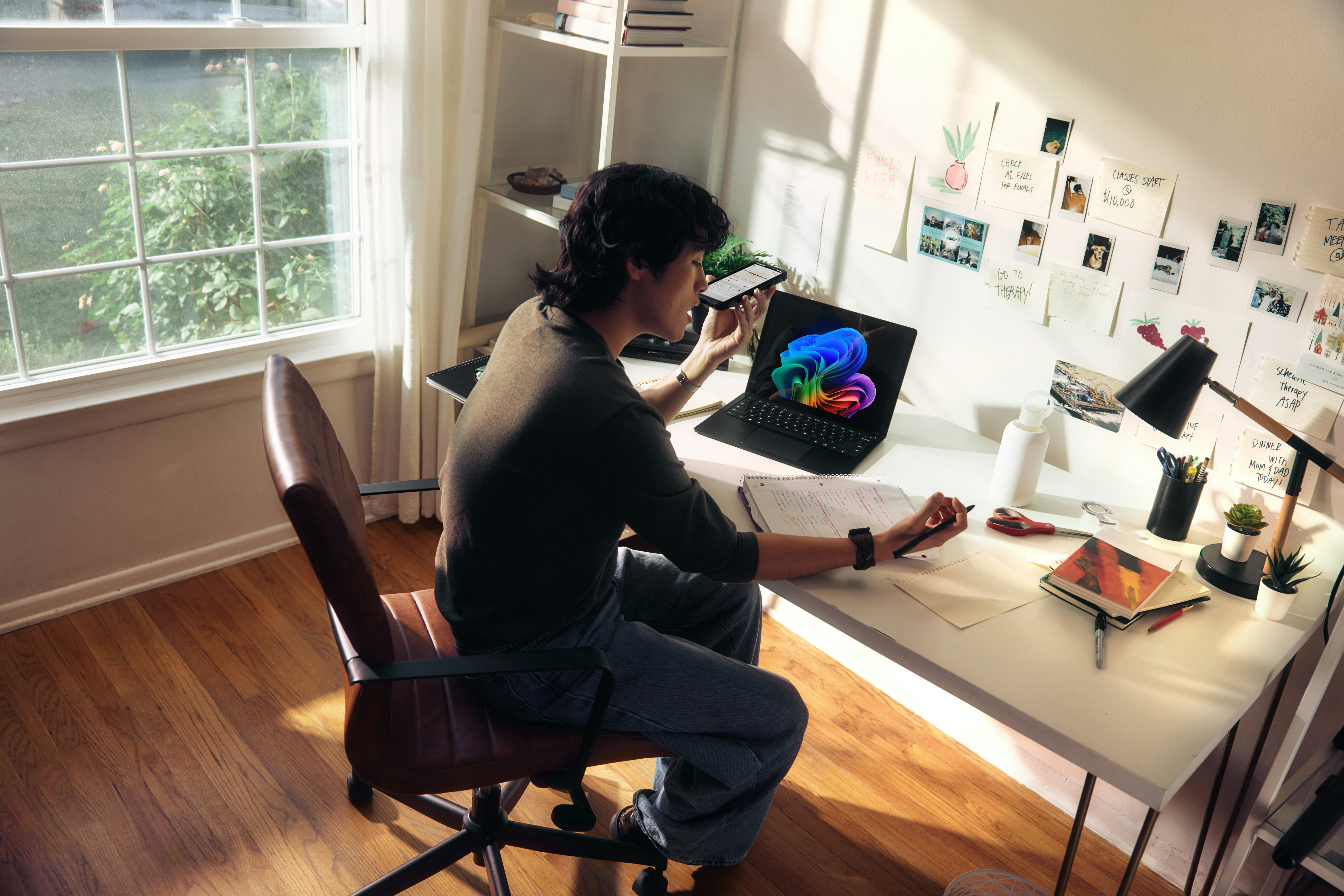
Your workspace is not a neutral place, but a direct extension of your brain. Everything you see demands attention. A desk full of stuff causes constant micro-distractions, even if you do not consciously notice it.
Your brain continuously filters information. The more visual stimuli there are, the harder that filter has to work. That costs energy and slows down your thinking process. The result is that you get tired faster, switch more often, and work less deeply. Not because you are less motivated, but because your environment continuously pulls at you.
Those who strategically arrange their workspace often notice an immediate difference. Start with a reset and build up consciously again. What you need is visible, what you do not need disappears. By preparing your next task, you lower the barrier to start. By removing distractions from sight, you prevent yourself from having to correct constantly.
From Lost Time to Strategic Space
Travel time often feels like something you have to endure, but in reality, it is one of the few moments when you have full control over input.
Because you are detached from your immediate work environment, mental space is created. You are not in your inbox, not in meetings, and not in constant interaction. This makes it an ideal place for reflection or targeted input.
The key is to determine in advance what the role of your travel time is. Not every trip needs to be the same, but randomness almost always creates noise. By establishing patterns, you prevent yourself from having to choose anew each time and use this time much more consciously.
Clothing: How You Position Yourself
Clothing may seem like a detail, but it influences how you think and act. Not only externally but especially internally.
What you wear creates a context for yourself. It sets a framework for how you behave. In clothing that makes you feel sharp, you make decisions faster and communicate more directly.
Equally important is that good choices provide mental peace. If you do not have to think about what you wear, your attention remains available for more important things. By standardizing this, you remove unnecessary noise from your day.
The People Around You
Your environment ultimately consists mainly of people. And their influence is structural.
You adopt behavior through exposure. The more often you see something, the more normal it becomes. This applies to ambition, pace, and even how big you think.
Instead of directly cutting your existing environment, it is often more effective to add purposefully. New environments provide new reference frameworks. As a result, your norm shifts, often without you realizing it.
Why Discipline Often Loses
Discipline works as long as you have energy. But as soon as that energy decreases, your environment wins.
Every decision costs energy. If you constantly have to choose between distraction and focus, you become exhausted more quickly. As a result, good behavior becomes increasingly difficult to maintain.
The solution lies not in trying harder, but in setting up smarter. By optimizing your environment, you make good choices automatic and bad choices less accessible.
Small Adjustments, Big Effect
Change does not have to be big to have an impact. In fact, small adjustments often work better because they recur daily.
A small improvement that has an effect every day grows exponentially. The difference lies not in one moment, but in repetition. Those who optimize their environment step by step build an increasingly stronger system without realizing it.
From Motivation to System
Motivation is unpredictable. One day everything goes smoothly, the next day everything is difficult.
If you depend on motivation, your output remains variable. By designing your environment to support you, regardless of how you feel, you create stability. You build a system you can always fall back on.
Growth is a Design Choice
Most people seek growth in behavior. More discipline, better routines, more focus. But the real acceleration lies in how you have set up your environment.
Optimizing your environment determines how fast you grow. Not because you have no control, but because you often do not consciously use that control.
And that is exactly where the opportunity lies. Not working harder, not wanting more, but designing smarter.