
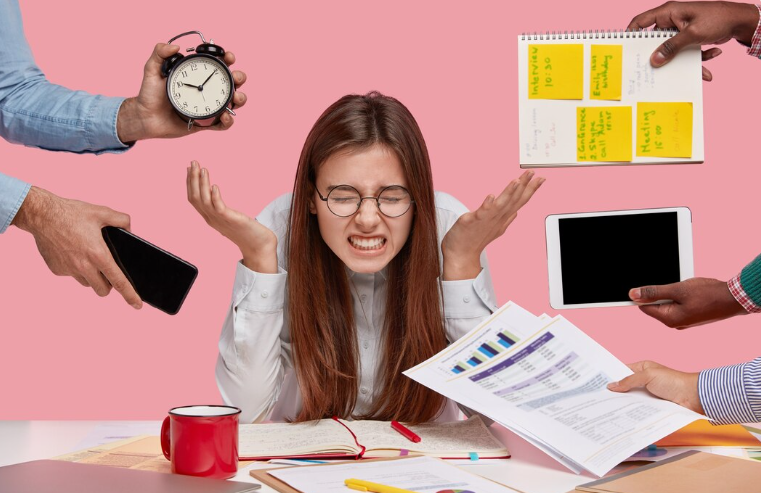
That’s not only exhausting, it’s also risky. During busy periods, stimuli pile up: notifications, deadlines, Teams calls, personal obligations. Your brain gets few moments to recover. And that recovery determines how you perform tomorrow: your concentration, your patience, your creativity, and your decision-making.
And if you notice that you’re still "on" after work due to notifications and messages, it can help to be more mindful about digital work pressure.
Why switching off is so difficult for entrepreneurs
Many people recognize the moment: you come home, but you’re not yet "home". Your mind is racing. You think about what went wrong today, what needs to be better tomorrow, which invoice is still outstanding, which client you still need to call. That’s not a lack of discipline; it’s your brain trying to secure open ends. Without such a transition moment, your brain keeps going, and relaxing becomes harder, even when you’re already on the couch.
That’s why "just relaxing" often doesn’t work. You can flop down on the couch, but if you’re still mentally working through your task list, it’s more of a numbing than a recovery.
What does help: treating switching off as an active action. A transition ritual, a short routine, a clear boundary. Then you give your brain the signal: the workday is over – the rest can wait.

Start with a fixed 'transition' from work to private
Most entrepreneurs try to recover without first closing off. That’s like turning off the engine while still on the highway. A short closing routine makes the difference between "rolling into the evening" and "stepping into the evening".
A practical closing routine (7 minutes):
- Note in one sentence: What was the most important thing I did today?
- Write down 3 points: what is done, what is next, what can wait.
- Set one clear boundary: when you no longer respond to work (e.g., after 8:30 PM).
You don’t have to finish your work perfectly; you need to mentally park it. That’s the gain.
Quick tip: the "Parking Sentence" (works surprisingly well)
Literally write down: "I have seen this. I will pick it up tomorrow at 9:00 AM with step X."
Your brain relaxes faster when it knows when and how something will return.
See the tips below as a toolbox. Not every evening requires the same solution, but if you have a few proven options ready, relaxing becomes less dependent on chance. Choose one or two that suit you and use them to consciously relax.
1) Play a game: take your brain out of 'problem-solving mode' (without it needing to be useful)
After a day full of decisions and stimuli, your mind often stays in the same mode: scanning for problems, remembering open ends, preparing for tomorrow. A game works surprisingly well because it occupies your attention with something unrelated to work. Not because it’s productive, but because your brain finally gets to engage elsewhere – with a beginning, an end, and clear rules. That’s exactly what’s often missing after a hectic day.
You can keep it very simple: a card game at the table with the family, a board game that you solve together, or (if you’re alone) a game that requires real focus. And that focus is the gain: the more you have to think, plan, or collaborate, the less room there is to ruminate over work thoughts.
A fun detail from Winmag that fits here (and that I previously brushed off too quickly): if you and your friends are crazy about card games, you can have playing cards printed with your group name or association. This makes it not only more personal, but it can also be an original gimmick for a friends' day, networking event, or (small-scale) event. Not as a "marketing trick", but as something that creates atmosphere – and atmosphere is also recovery. You’re doing something completely different from work, but you’re investing in connection.

Practice check: this is how it really becomes relaxation (instead of yet another stimulus)
- Timebox it: 20–30 minutes is enough to switch.
- Prefer one game that requires attention rather than aimlessly doing multiple things half-heartedly.
- Put your phone on silent / Do Not Disturb, otherwise your workday will still leak into your evening.
2) Take a walk: a short reset that "closes" your day
A walk may be the simplest tip, but that’s why it works so well: you literally move yourself out of the work context. Being outside, fresh air, moving – it sounds basic, but it’s the exact opposite of how many entrepreneurs end their day: just a bit more laptop, just a bit more screen, just a bit more messaging.
What makes walking extra effective is that it can become a transition ritual. Entrepreneurs often don’t have a clear "office door" that closes; work is in your phone. A fixed route of 15 to 30 minutes can symbolically close that door. Your body learns: shoes on = work done.
You can walk in silence and just see what you see (the calm around you does a lot), but a podcast or music can also work – as long as you don’t dive into work content again. Do you have a dog? Take it with you. That makes the routine easier to maintain, as it’s not dependent on motivation but on responsibility (and entrepreneurs are good at that).

Routine in 3 steps: a 'post-work round' that you can maintain
- Keep it small: better to do 15 minutes every day than one hour once a week.
- Choose a fixed route: repetition = faster switching.
- If necessary, take one "ideas note" with you: if a work idea comes up, park it briefly and keep walking, so your walk doesn’t turn into a brainstorming session.
3) Take a warm bath or shower: your body as an on/off switch
Sometimes tension isn’t in your thoughts but in your body: shoulders high, jaws tight, breath shallow in the chest. Warm water is then a direct shortcut to relaxation. Your body gets the signal that it’s safe to let go – and when your body relaxes, your mind often follows.
A warm shower or bath can help with that.
The difference lies in how you do it. A quick shower "to get clean" is different from a shower as a transition moment. Consciously leave your phone outside the bathroom. Not because you "can’t scroll", but because you give yourself one place where work can’t find you.
Make it a mini-ritual: slow pace, possibly a body scrub, face mask, or a short breathing exercise in the shower. The more consistently you do this, the stronger it becomes as a signal: work mode off, recovery mode on.

Quick routine: mini-spa without hassle
- Phone away (really).
- 2 minutes of slower breathing than normal.
- End with "done": towel, clean clothes, and then do NOT open email.
4) Write your thoughts down: parking is sometimes better than "letting go"
If you keep ruminating, it’s often not because you want to think about work, but because you’re afraid of forgetting something or because your brain hates open ends. Writing helps because you no longer have to use your head as a memory. What’s on paper doesn’t need to keep buzzing around.
For entrepreneurs, this is extra valuable: you often have many roles at once (sales, personnel, administration, planning). This automatically makes your mind a sort of to-do dashboard. By "unloading" everything in the evening, you give yourself peace and make tomorrow easier.
A short 'brain dump' works best if you keep it simple: write down everything that’s still on your mind in five minutes – tasks, worries, ideas. Then, if necessary, make one small list with only what’s necessary for tomorrow. Feel free to see that as a to-do list for the next day.

5-minute exercise: brain dump that gives you back your sleep
- Set a timer for 5 minutes, write everything down.
- Underline 3 things that really need to be done tomorrow.
- Note one first step per point (so your brain doesn’t keep puzzling).
5) Plan a screen-free evening: rest is also "less input"
Scrolling feels relaxing because you don’t have to do anything – but in the meantime, you’re continuously taking in new stimuli. Opinions, news, videos, messages: your brain keeps processing. After a day in which you’ve already had to evaluate too much information, that can actually keep you awake instead of letting you land.
A screen-free evening doesn’t necessarily mean "digital detox" right away. It’s about a clear period in which you protect yourself from extra input. And yes: that also helps with falling asleep, as screen use can keep your brain active and you easily keep going with "just a bit more". This way, you create a block in which you can truly relax, instead of processing even more input.
If you notice that scrolling makes you more restless than relaxed, a short digital detox may already be enough to calm your mind again. This is partly because blue light can keep your brain active longer, making it harder to fall asleep sometimes.
Make it practical for yourself: agree on a fixed time (for example, after 8:30 PM) when you no longer check emails, news, or social media. Put your phone in another room and choose one calming activity. The effect lies not only in the calm but also in the signal: I am no longer available – not even for myself.

Practical agreements: this is how you prevent relapse
- Put your phone in one fixed place (not next to you on the couch).
- Choose one activity (book, puzzle, drawing, crocheting).
- If necessary, turn on an automatic evening mode (Do Not Disturb + no work email).
6) Exercise: release tension, invite sleep (with the right intensity)
For many people, exercising is the fastest route to a clear mind because it forces your attention to your body: breath, pace, strength, coordination. Especially if your day has mostly been "in your head" – thinking, deciding, communicating – moving can feel like unloading.
That doesn’t always have to mean "going hard". A solid workout at the gym works, but a run or a game of soccer with friends can work just as well. The most important thing is to choose something where you notice: I’m not dealing with clients, numbers, or planning right now.
For many entrepreneurs, it helps to simply plan this as a fixed workout.
Moving also helps to reduce stress and release tension from your body.
Do pay attention to timing. Some people become more alert from intense exercise right before bed. If you recognize that, plan your workout a bit earlier and finish with a cool-down or stretching. This way, you help your body switch back instead of letting adrenaline take over your evening.

Recovery check: exercise as recovery (not as extra performance)
- Choose something you enjoy; otherwise, it becomes "a must".
- End more calmly than you start (cool-down).
- Do you notice that exercising late keeps you awake? Then do it earlier in the evening, or choose a milder session.
Conclusion: make relaxation a fixed part of your work strategy

Relaxing after a busy day is not an "extra", but maintenance. If you consistently recover too little, you will notice it in your business: you respond more curtly, make more careless mistakes, stay longer in your head, and start the next day already at a disadvantage. Recovery is therefore not something you do when there’s time left – it’s what you need to stay sharp at moments that truly matter.
The key is also not the perfect evening routine. The key is repeatability: one or two habits that you almost always maintain, even on busy days. Because that’s when you need them the most. Think of relaxation as a fixed switch between "work done" and "evening begins".
Make it concrete with a short trial of one week:
- Choose 1 fixed transition (e.g., 20 minutes of walking or a shower ritual without a phone).
- Add 1 parking action (e.g., 5 minutes of brain dump, so your mind doesn’t keep remembering what needs to be done tomorrow).
- Set 1 digital boundary (e.g., no emails, Teams, or socials after 8:30 PM).
Examples of simple basic combinations:
- 20 minutes of walking after work + 5 minutes of brain dump
- Shower ritual without a phone + screen stop at 8:30 PM
Your brain will learn to switch faster from work mode to recovery mode. And that’s exactly what you, as an entrepreneur, will benefit from the next day: more focus, better decisions, and more energy to lead rather than just survive.
Disclaimer: if you have been sleeping poorly for a long time, feel constantly rushed, or notice that you hardly recover anymore, it’s wise to discuss this early with your doctor or a professional.