
Financing is the oxygen of entrepreneurship. Without capital, there is no growth, no innovation, and no social impact. For a long time, entrepreneurs were mainly reliant on banks and a select group of investors. That landscape has changed. Alternative financing options have carved out their place as powerful tools with which companies not only raise money but also build communities and accelerate change.
Alternative financing has a different playing field than the bank
Traditional financing, from the bank, has been under pressure for years. Stricter regulations, a cautious attitude towards risky plans, and long lead times mean that many entrepreneurs are broadening their horizons. At the same time, the need for capital is enormous, not only to grow businesses but also to tackle social challenges such as sustainability, health, and inclusivity.
Where banks primarily look at securities and collateral, alternative financing is realized through the story, the community, and the social or sectoral added value of a company. Financing thus becomes more than just money.
Read more about entrepreneurship, investing, and financial matters in Finance.
Crowdfunding as part of the mix
Crowdfunding is perhaps the best-known form of alternative financing. It is a way to raise capital from a broad group of investors while simultaneously creating support. A successful campaign proves that an idea is viable and often also provides visibility and trust among customers, suppliers, and future financiers. Always check the rules and risks of crowdfunding; the AFM has a handy step-by-step plan.

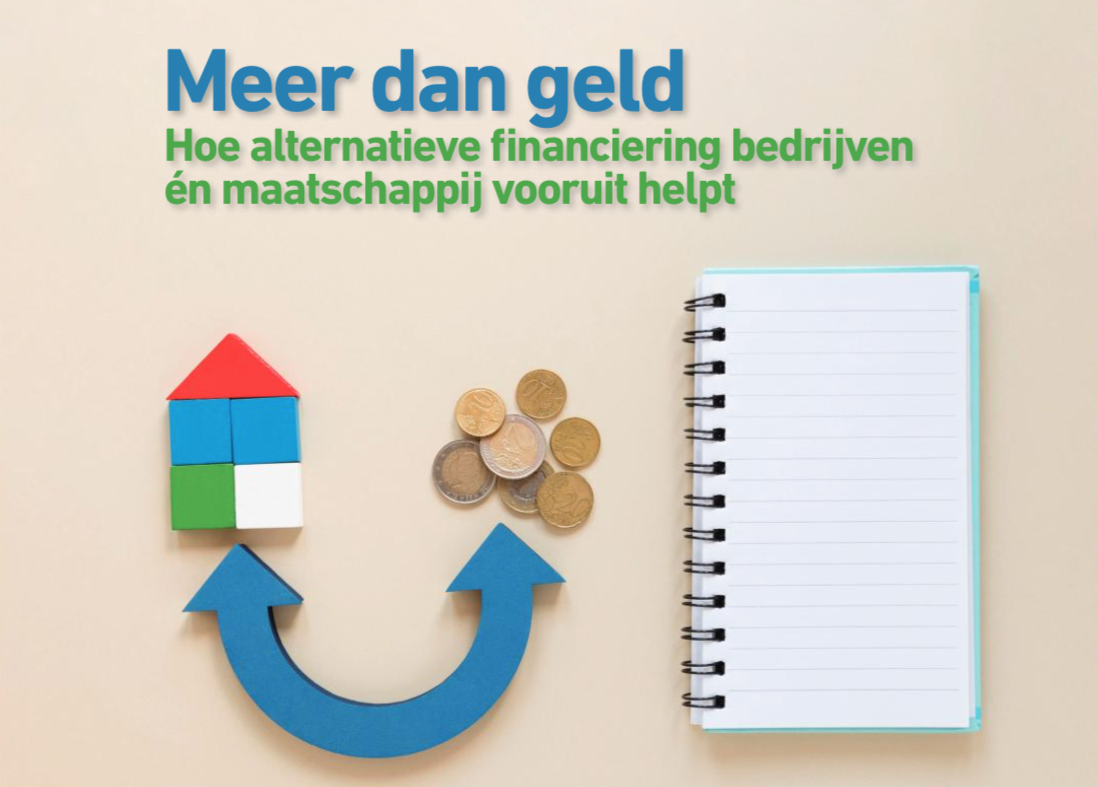
Alternative financing as fertile ground: how small contributions together form the basis for social growth and thriving businesses.
However, crowdfunding is just one part of a much broader movement. Another variant that you see more often is crowdlending – and impact funds, venture capital, family offices, and strategic investments are all part of the same ecosystem where entrepreneurs are not only looking for money but also for partnership and impact.
Lunch Bunch: bread on the table for everyone
A business that illustrates this development is Lunch Bunch. This social caterer combines an inclusive labor market with a sustainable food chain. People who previously had no chance in the labor market - for example, due to mental issues or a traumatic past - are given a fair job at Lunch Bunch. They prepare and deliver healthy lunches for companies, packaged in sustainable materials, with locally sourced ingredients and delivered using sustainable transport.
An alternative approach, but not less successful: since its founding in 2022, Lunch Bunch has created more than 25 paid jobs, trained over 30 young people, and made 80,000 sandwiches for the Dutch business community. This has saved more than €450,000 in benefit costs. The relapse rate of employees is significantly lower than in regular programs, making Lunch Bunch a valuable partner for municipalities and the UWV.
To grow further, Lunch Bunch raised an investment of €565,000 in September 2025 from the Social Impact Fund Rotterdam (SIF) and the Impact Fund Sustainable Food Chain (IFDV). This will allow activities in Rotterdam to be scaled up and launched in The Hague starting in 2026. Financing is urgently needed, says founder Robin Achterkamp: 'Our mission is to offer people who have not yet been discovered by the labor market a fair place within our company and society. At the same time, we are committed to a healthier and more sustainable food chain. Thanks to this investment, we can realize that mission on a larger scale.'
OAASIS: making supply chains smarter with AI
Also on a technological level, alternative financing is often the solution. The OAASIS, launched in 2025, raised €2.9 million to develop an AI-driven SaaS platform for supply chain optimization. Founders Wouter Samama and Lucas Koster saw that many medium-sized companies lack the right software and expertise to optimize their chains.
OAASIS aims to make that expertise accessible. Using AI models, complex supply chain operations are made transparent and calculated. Companies gain control over inventory, production, purchasing, and logistics at a glance. This allows them to work more efficiently, reduce costs, and increase their service level.
The modular, plug-and-play nature ensures that OAASIS can be operational within a month and easily grows with the company. The results are promising: a potential ROI of 300 percent, an improvement in inventory accuracy of up to 30 percent, and a reduction in operational costs of 10 percent.
With the financing, OAASIS was able to build a team of eleven specialists and onboard the first customers, including Marcel's Green Soap, Senza Tea, and e-Luscious. The ambition is great: to expand to the United Kingdom, Germany, Austria, and Switzerland within two years, followed by further international expansion.
CEO Wouter Samama emphasizes the importance of accessibility: 'Compared to large corporates, smaller companies often lack the right software, processes, and people for optimal supply chain management. With OAASIS, we fill this gap and ensure that they can easily operate at the same level.'
'Alternative financing accelerates movements that help society move forward'
More than just returns
The stories of Lunch Bunch and OAASIS show that the impact of alternative financing goes beyond raising capital. For Lunch Bunch, it is about employment and inclusion; for OAASIS, it is about technology that enables SMEs to compete with the big players. In both cases, it is about more than financial returns. It is about accelerating movements that help society and the economy move forward.
It also demonstrates the power of pooling, or community. Alternative financing brings many smaller contributions and partnerships together into one big result. This means more involvement and a much broader base of support.
The future of entrepreneurship
Alternative financing is no longer a niche. It forms a serious pillar under the entrepreneurship of the future. Companies that choose this path not only raise capital
but also build trust, visibility, and impact. Lunch Bunch and OAASIS show, for example, what that looks like in practice: from creating jobs to optimizing international supply chains. Their stories make it clear that the future of financing is about more than numbers. It is about connection, trust, and the willingness to invest together in a better world.
Investing together in change
As traditional financing comes under pressure and socially responsible entrepreneurship becomes the norm, it is time to look at alternative financing. Through crowdfunding, you create support faster, especially with a riskier idea. It is crucial that those ideas get a platform - without them, we will never move forward.